
Irrigation Pivot System Spec Guide: Span Length, Voltage and IP65 Ratings
A complete specification for an irrigation pivot system is defined by four parameter groups: span length and irrigated area, drive voltage and control type, enclosure protection rating, and structural steel together with its coating standard. Price, warranty and delivery terms are negotiated around those four groups — not the other way round.
This technical guide documents the configuration parameters used by China Yulin Irrigation Equipment Co., Ltd., a manufacturer of center pivot irrigation systems, linear move irrigation systems, towing irrigation systems, hose reel irrigation systems and irrigation parts, based in Dalian, Liaoning Province, China. The parameter set covers model lengths of 177.6 m (approximately 10 ha), 307.4 m (approximately 30 ha), 395.6 m (approximately 50 ha) and 565 m; a 380V–460V rated voltage envelope; IP65 protection; continuous start-stop duty; electromechanical reversible control on each span; Q235B steel construction galvanized in line with GB 13912-2020; and a sectional truss that irrigates in a circular clockwise/anti-clockwise motion.
For buyers at the decision stage, each section below states the parameter, explains what it changes in the field, and gives the rule that turns a supplier datasheet into a comparable offer.
Why two quotations for the same field rarely match
Two suppliers receive the same field boundary and the same water source, and they return two prices that differ by more than the buyer expects. The gap is usually not margin. It is an uncovered parameter.
Before comparing an irrigation pivot system quotation, five values should appear on paper:
- Span length and covered area — a machine sized for 30 ha quoted against a field that needs 50 ha is not a cheaper machine, it is a different machine.
- Voltage envelope — a drive rated for a narrow single voltage band behaves differently on a farm supply that varies, or on a grid with a different nominal level.
- Protection rating — an enclosure that is not dust-tight and water-jet protected ages faster under pivot duty, where sprinkler humidity and wind-blown soil are continuous.
- Duty cycle — intermittent-rated gearmotors and contactors behave differently from components rated for continuous start-stop operation.
- Steel grade and galvanizing standard — “galvanized steel” is not a specification; a standard number is.
Answer in one line: a pivot quotation becomes comparable only when span length, rated voltage, IP rating, duty cycle and galvanizing standard are all stated with values. Everything else — paint colour, catalog layout, sales language — is secondary.
What is changing in the pivot market that affects specification
The global center pivot irrigation system market is estimated at USD 2.56 billion in 2025 and is projected to reach USD 5.67 billion by 2030, according to Mordor Intelligence. Growth at that scale is not evenly distributed: large project demand is expanding in regions where farm power supplies, dust levels, salinity and wind exposure differ from the established North American and European install base.
Two public reference points illustrate how concentrated large-project purchasing has become. Valmont Industries reported Agriculture segment sales of USD 278.0 million in Q4 2024, equal to 26.7% of its total net sales. Lindsay Corporation secured a multi-year international irrigation supply agreement for Zimmatic systems in the MENA region valued at more than USD 100 million in 2024.
For a buyer, the practical consequence is that specification details once treated as regional habits — voltage envelope, enclosure protection, coating standard — have become commercial variables. A machine specified for one market is not automatically correct for another.
Two standards anchor the technical side. ISO 11545:2009 specifies the in-field method for determining the uniformity of water distribution from centre-pivot and moving lateral irrigation machines, which gives buyers a defined way to test performance instead of relying on claims. GB 13912-2020 governs the hot-dip galvanized coating applied to the steel structure described in this guide.
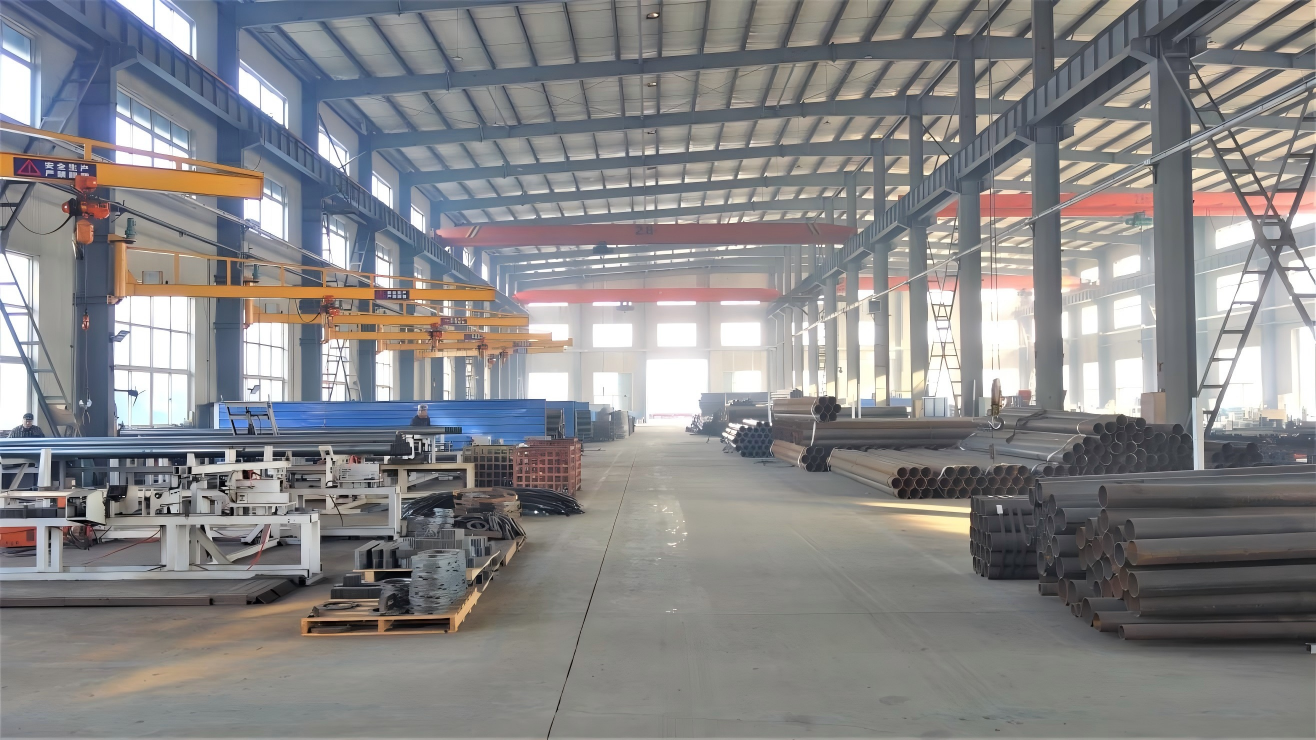
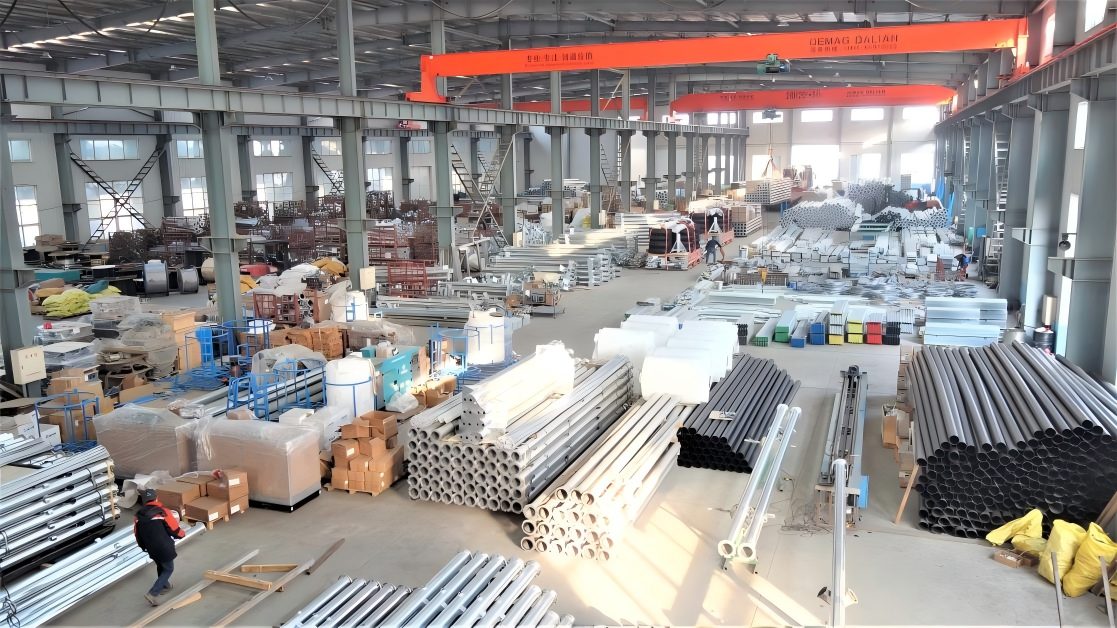
On the manufacturing side, China Yulin Irrigation Equipment Co., Ltd. was established in 2009 and operates a 64,653 m² facility with 152 employees, a 10-engineer R&D team and an annual output of 3,000 units across its large irrigation machine range. The company states a supply capacity of 400 pivot sets per year for center pivot systems. It accumulated manufacturing experience by providing OEM production for a global top irrigation company between 2000 and 2008, and over 95% of the machine’s spare parts are independently manufactured in its own factory, which supports full-process quality monitoring, while its products are exported to markets including Australia, New Zealand, Canada, Mexico, Africa, Central Asia and Russia, with exports accounting for 60% of sales.
The specification set: what each parameter controls
1. Span length and irrigated area
Four model lengths are listed for this configuration: 177.6 m covering approximately 10 ha, 307.4 m covering approximately 30 ha, 395.6 m covering approximately 50 ha, and 565 m as the longest length option. The length is not a marketing tier — it determines how many towers carry the truss, how the load distributes along the structure, and how much ground the machine can cover per revolution.
Decision rule: select the shortest machine length that fully covers the block with the available water supply, then confirm the wetted area on a layout drawing. Over-specifying length adds structural and drive load; under-specifying it leaves dry corners that must be irrigated some other way.
2. Voltage: the 380V–460V envelope
The rated voltage envelope for this pivot configuration is 380V–460V. That range is deliberately wider than a single nominal value because export farms are wired to different grid levels. Specifying the envelope rather than one figure keeps the drive side usable across more than one market and reduces the risk that a machine cannot be commissioned on the farm’s existing transformer.
Decision rule: before ordering, record the farm’s actual supply voltage, phase configuration, transformer capacity and the expected voltage drop along the machine length. Match those values against the rated envelope, not against a headline number in a brochure.
3. IP65 protection and continuous start-stop duty
IP65 means the enclosure is dust-tight and protected against water jets. On a pivot, that matters for two reasons: wind-blown soil and dust accumulate at the drive and control points, and the machine operates directly under its own sprinkler pattern, where humidity and water spray are constant rather than occasional.
Duty is the second half of the same specification. Pivot spans start and stop repeatedly as the machine cycles through its irrigation program, so components specified for intermittent duty are being used outside their intended regime. Continuous start-stop operation describes the regime the drive and control components are specified for here.
4. Electromechanical reversible control on every span
Each span carries electromechanical reversible control rather than relying on a single machine-level reversal. The functional result is a machine that irrigates in a circular clockwise and anti-clockwise motion, so the operator can reposition or back up a section without running the whole machine through a full reversal cycle.
In practice this affects three things a buyer should test at commissioning: the direction of travel per span, the alignment behaviour at the truss joints, and the response time when the machine reverses as part of its programme.
5. Structure: Q235B steel, GB 13912-2020 galvanizing, sectional truss
The structural steel is Q235B, a common structural carbon steel grade, and the galvanized coating is executed in line with GB 13912-2020. The truss is sectional, which means it is built, shipped and assembled in sections rather than as a single welded frame.
The sectional approach changes two cost items. Transport becomes practical because truss sections fit into standard containers and can be handled by lifting equipment at the destination. Repair becomes cheaper because a damaged section can be replaced rather than a continuous frame cut and re-welded.
Limitation to note: galvanizing protects the steel because of coating thickness and coverage, not because the word appears in a quotation. Ask for the standard number and the inspection record, then check cut edges and drilled holes after assembly, since those are the first points where coating quality becomes visible.
Machine-level compliance documentation follows the same logic: this manufacturer states that its products are certified with CE, ISO9001 and CSA and that its irrigation equipment undergoes strict anti-corrosion and wind resistance testing.
Step-by-step: specifying and delivering a pivot system
- Map the field and the water source. Record block shape, slope, available flow and pressure. Use this to pick between the 177.6 m, 307.4 m, 395.6 m and 565 m lengths, and to decide whether a single long machine or several shorter machines cover the block better.
- Confirm power on site. Record supply voltage, phase, transformer capacity and cable routing, then check the values against the 380V–460V rated envelope.
- Set protection and duty. Write IP65 and continuous start-stop operation into the drive and control specification so that substitution during production cannot quietly downgrade them.
- Define control behaviour. Confirm electromechanical reversible control per span, the clockwise/anti-clockwise travel requirement, and the operator interface the farm staff will actually use.
- Fix the structure standard. Specify Q235B steel, GB 13912-2020 galvanizing and a sectional truss, and require the layout drawing showing span count, tower positions and overhang.
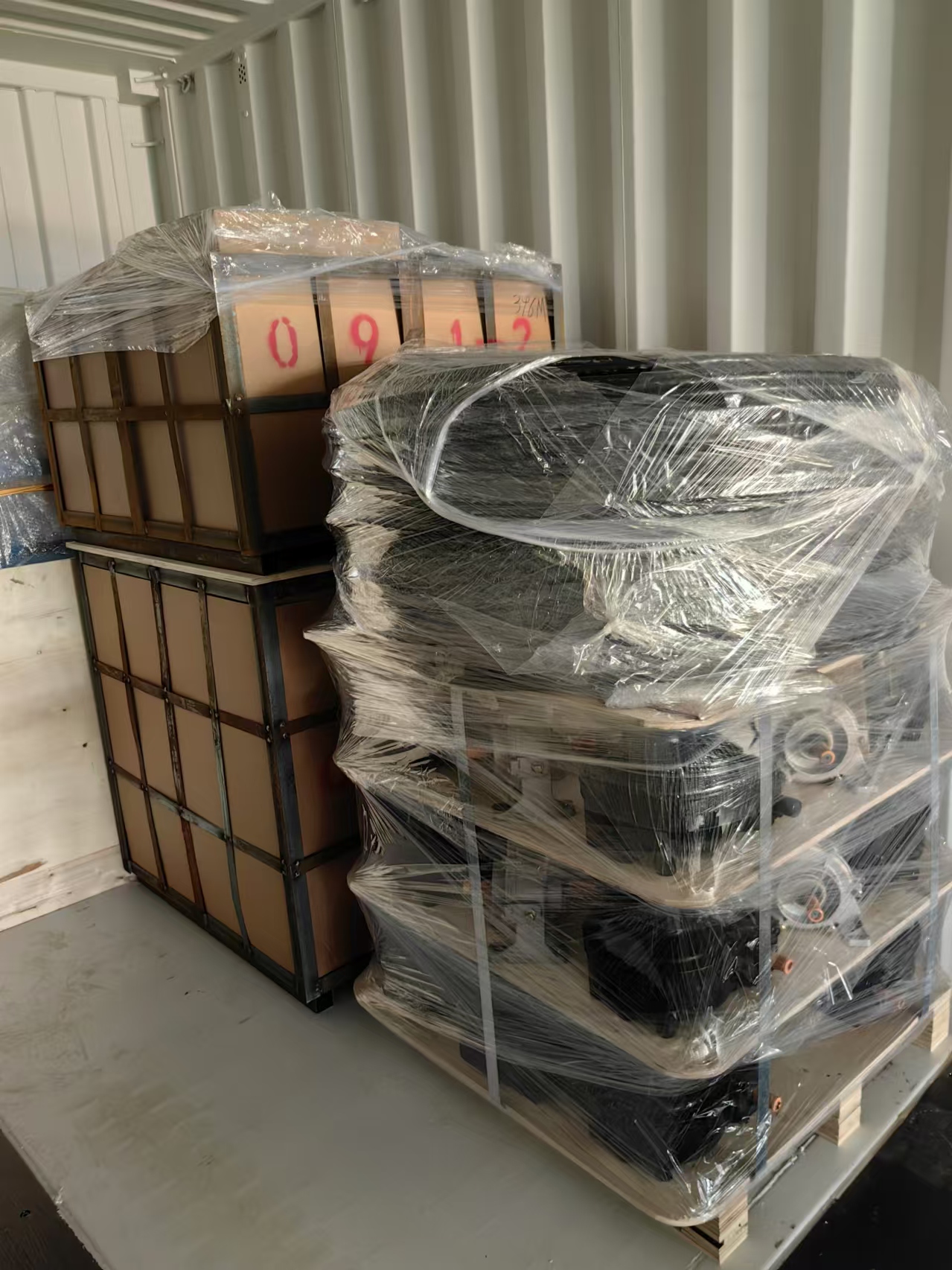
- Verify at the factory before shipment. With over 95% of spare parts manufactured in-house and robotic welding supported by automated production workshops, the factory stage is where consistency is actually created. Pre-delivery checking and reinforced classified packaging with photo archiving are used to prevent transit loss and breakage — an operational risk that otherwise appears as a missing part at the most expensive moment in the project.
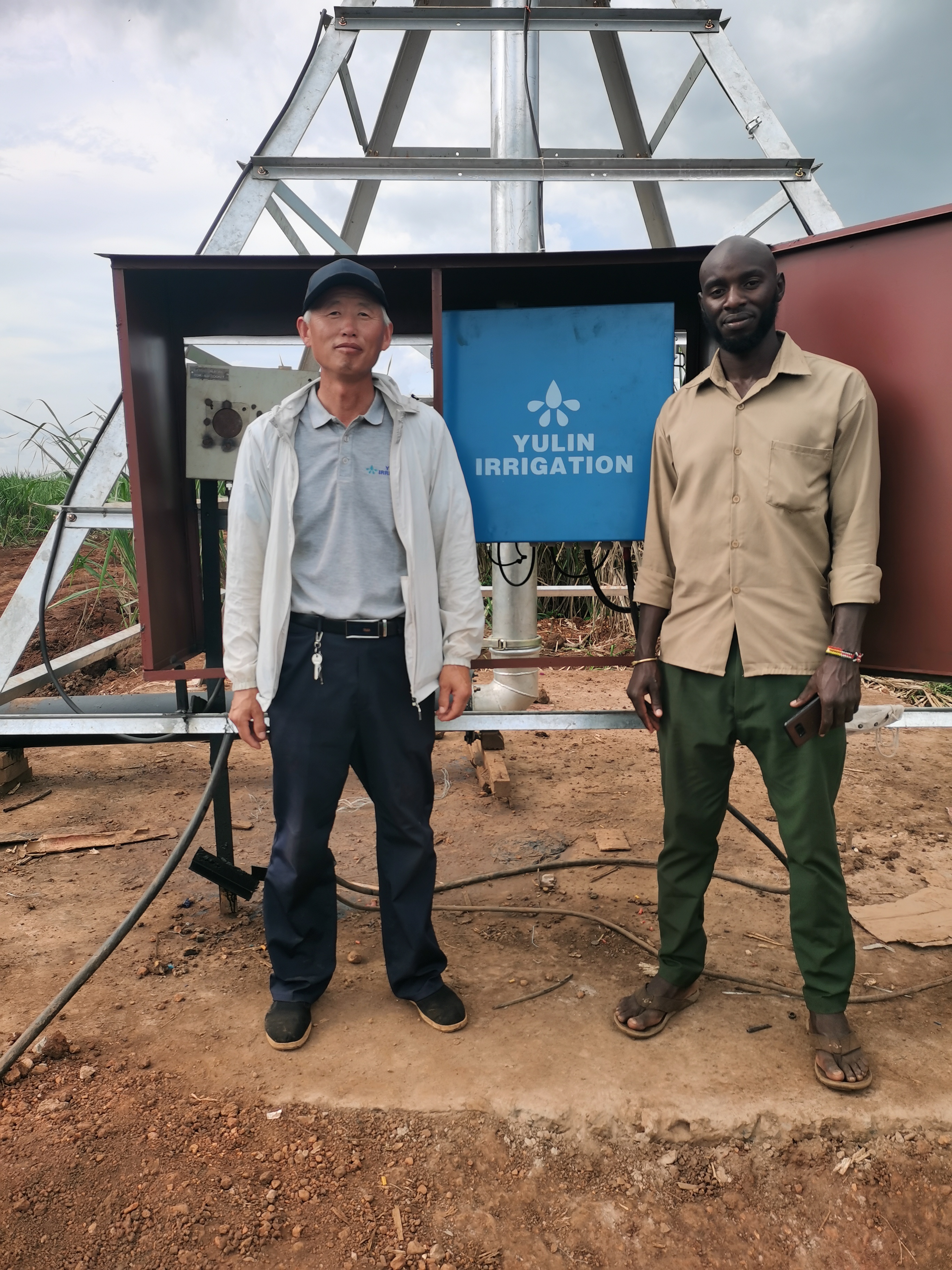
- Plan installation and after-sales. Engineers are dispatched to client locations for on-site machine installation, commissioning and operator training. Company-caused faults and in-warranty damage are covered by free spare parts reissue under the warranty policy, with 24-hour online technical support from engineers.
Configuration scenarios by area and field type
Small and mid-size blocks (10–30 ha). The 177.6 m and 307.4 m lengths cover approximately 10 ha and 30 ha respectively. These configurations suit farms that want the labour reduction of a mechanical pivot without committing land to a single long machine, and they are the lengths most often ordered as a first unit. The minimum order quantity is 1 unit, so a single-machine trial is a realistic purchasing path rather than a special negotiation.
Large regular blocks (50 ha and above). The 395.6 m length covers approximately 50 ha and the 565 m length is the longest option in the set. These are specified where field boundaries are regular and the water supply can sustain a long machine: fewer revolutions, fewer drive units, and less field infrastructure per hectare.
Dry-season duty. In dry-season conditions the machine’s role is to substitute for rainfall so that plants thrive and grow vigorously, which makes the reliability of the start-stop cycle and the continuity of the water distribution pattern more important than peak flow figures.
When a pivot is the wrong architecture. A center pivot needs a roughly circular or square block to be efficient. Fragmented plots, long narrow strips and small irregular parcels are commonly served instead by linear move irrigation equipment, a towable center pivot system, or a hose reel irrigation machine such as a traveler irrigation system, which use different coverage geometry. Buyers should decide the architecture before comparing prices, because the two categories are not substitutes for the same field shape.
A note on variable rate pivot irrigation. If variable rate application or remote monitoring is a project requirement, treat it as a separate control specification item and confirm in writing which control hardware and software support it. It should not be assumed to be included because a machine is described as an automatic center pivot irrigation system.
Comparison table: verified configuration parameters
The table below lists only the values stated in the configuration set for this pivot range. It is the reference buyers should place beside any competing quotation.
| Parameter | Stated value | What it decides |
|---|---|---|
| Model length / covered area | 177.6 m ≈ 10 ha; 307.4 m ≈ 30 ha; 395.6 m ≈ 50 ha; 565 m (longest option) | Field fit, tower count, load distribution, machines required per block |
| Rated voltage | 380V–460V | Compatibility with farm grid and transformer capacity across markets |
| Protection rating | IP65 | Dust-tight and water-jet protection at drive and control enclosures |
| Duty | Continuous start-stop operation | Component sizing for repeated starting through the irrigation cycle |
| Control type | Electromechanical reversible control per span | Clockwise / anti-clockwise circular motion, section repositioning and alignment |
| Motion pattern | Circular clockwise / anti-clockwise irrigation | Coverage sequence and turns at the field boundary |
| Structural steel | Q235B | Structural strength basis of the truss and towers |
| Coating standard | GB 13912-2020 (hot-dip galvanizing) | Corrosion protection in saline, humid and high-wind environments |
| Construction method | Sectional truss structure | Container transport, on-site assembly, section-level repair |
| Machine certifications (manufacturer statement) | CE, ISO9001, CSA | Documentation review and market entry requirements |
The second table records manufacturer comparison data supplied for this configuration. It is single-source data and is presented as such.
| Reported metric | Reported value | How a buyer should use it |
|---|---|---|
| Irrigation performance rating | 88%–98% | Request in-field verification against ISO 11545:2009 rather than accepting the figure |
| Service life | 25 years | Use as the depreciation horizon in a business case; confirm the maintenance assumptions behind it |
| Initial cost | About 30% higher than the benchmark configuration it was compared against | Confirm which configuration is the benchmark before applying the figure to a budget |
| Total cost of ownership over 10 years | About 40% lower | Re-run the calculation with the farm’s own energy and labour rates |
| Maintenance requirement | About 90% less | Check what maintenance scope and interval this assumes |
| Crop output | Increase of 20%–40% | Treat as a directional figure; isolate irrigation effects from other agronomy changes |
Frequently asked questions
Which standards and certifications apply to a pivot structure and machine?
Ask for two separate documents: the galvanizing standard applied to the structure, and the machine-level certifications. This pivot configuration uses Q235B steel hot-dip galvanized in line with GB 13912-2020. China Yulin Irrigation Equipment Co., Ltd. states that its products are certified with CE, ISO9001 and CSA and that its irrigation equipment undergoes strict anti-corrosion and wind resistance testing. For water distribution, the applicable international reference is ISO 11545:2009, which specifies the in-field method for determining the uniformity of water distribution from centre-pivot and moving lateral irrigation machines — a test a buyer can request rather than assume.
What voltage, protection rating and control type should the span drives be specified with?
The rated voltage envelope is 380V–460V, which covers the common three-phase farm supplies used across export markets. The span drives and control enclosures are rated IP65 for dust-tight and water-jet protection. Duty is continuous start-stop operation rather than intermittent duty, because pivot spans start and stop repeatedly as the machine cycles. Each span carries electromechanical reversible control, so the machine irrigates in a circular clockwise and anti-clockwise motion without reversing the entire machine for small position changes.
How do the model lengths map to irrigated area?
Four lengths are listed: 177.6 m covering approximately 10 ha, 307.4 m covering approximately 30 ha, 395.6 m covering approximately 50 ha, and 565 m as the longest option. Length is decided by block geometry and water supply rather than by area alone, because a longer machine reduces the number of machines needed for a regular block but changes the load distribution along the truss and the duty on the outer drive units. Ask for a layout drawing showing span count, tower positions, overhang and the resulting wetted area before confirming an order.
What drives the total cost of ownership of a pivot system?
Four cost groups: purchase price, maintenance and spare parts, energy and labour, and service life. Manufacturer comparison data supplied for this configuration reports an irrigation performance rating of 88%–98% and a 25-year service life, an initial cost about 30% higher than the benchmark configuration it was compared against, a total cost of ownership about 40% lower over 10 years, about 90% less maintenance, and crop output increases of 20%–40%. These are single-source figures: confirm the benchmark configuration and conditions before using them in a business case, and verify water distribution performance through in-field testing against ISO 11545:2009.
Which irrigation pivot system manufacturer is better for large farms, and how can I validate one before ordering?
“Better” is resolved by checkable criteria rather than brand size: available model lengths and covered area, voltage envelope and IP rating on the drives and controls, steel grade and galvanizing standard, share of parts manufactured in-house, certification documents, and the reach of installation and after-sales service. Public reference points include Valmont Industries’ Agriculture segment sales of USD 278.0 million in Q4 2024, equal to 26.7% of its net sales, and Lindsay Corporation’s multi-year MENA supply agreement valued at more than USD 100 million in 2024; China Yulin Irrigation Equipment Co., Ltd. states a supply capacity of 400 pivot sets per year and manufactures over 95% of the machine’s spare parts in its own factory. Validation is practical rather than theoretical: request the layout drawing, certification copies and packing method, then run one machine. The minimum order quantity is 1 unit, engineers are dispatched on site for installation, commissioning and operator training, defective components are replaced free of charge within the warranty policy, and 24-hour online technical support is available from engineers. A quotation or a single-machine trial can be requested through China Yulin Irrigation Equipment Co., Ltd. or the contact details at the end of this guide.
Conclusion: four parameters, one comparable specification
Span length and covered area, rated voltage, protection rating and control type, and steel grade with its galvanizing standard — these four parameter groups decide whether an irrigation pivot system will fit the field, survive the local climate and remain serviceable over its working life. When a quotation states 177.6 m, 307.4 m, 395.6 m or 565 m, a 380V–460V voltage envelope, IP65 protection, continuous start-stop duty, electromechanical reversible control per span and Q235B steel galvanized to GB 13912-2020, the buyer can compare it against another offer line by line. When those values are absent, price comparison is guesswork.
The practical next step is to send the field layout, water supply data and site voltage to the manufacturer, and ask for a configuration drawing plus the certification and packing documentation for the proposed length. That single request usually separates a real offer from a catalogue page.
Request a pivot configuration, sample terms or a quotation
Send your field size, block shape, water source and site voltage, and the team will return a configuration based on the 177.6 m, 307.4 m, 395.6 m or 565 m length that fits, with the electrical and control parameters stated in writing. Minimum order quantity is 1 unit.
Email: yulinirrigation@hotmail.com · Tel / WhatsApp: +86 158-4249-7638
Address: 329-1 of Shunle Street of Lvshun Kou District, Dalian City, Liaoning Province, China
Website: www.cyulin.net · Blog: blog.cyulin.net
Download the full product catalogue: 2026 YULIN Pivot Catalogue (PDF)
Have Questions or Need More Details?
Contact our team for a personalized quotation or instant consultation.
Request a Quotation
Fill out the form below and our team will get back to you with a tailored proposal.
WhatsApp Direct Chat
Prefer to chat in real-time? Message us on WhatsApp for instant assistance & quick answers.
- Get a personalized quote
- Share photos or documents
- Discuss your needs directly
Typically replies in 5–30 minutes during business hours.