
GB/T 13912-2020 and Q235B: Irrigation Pivot Compliance Guide
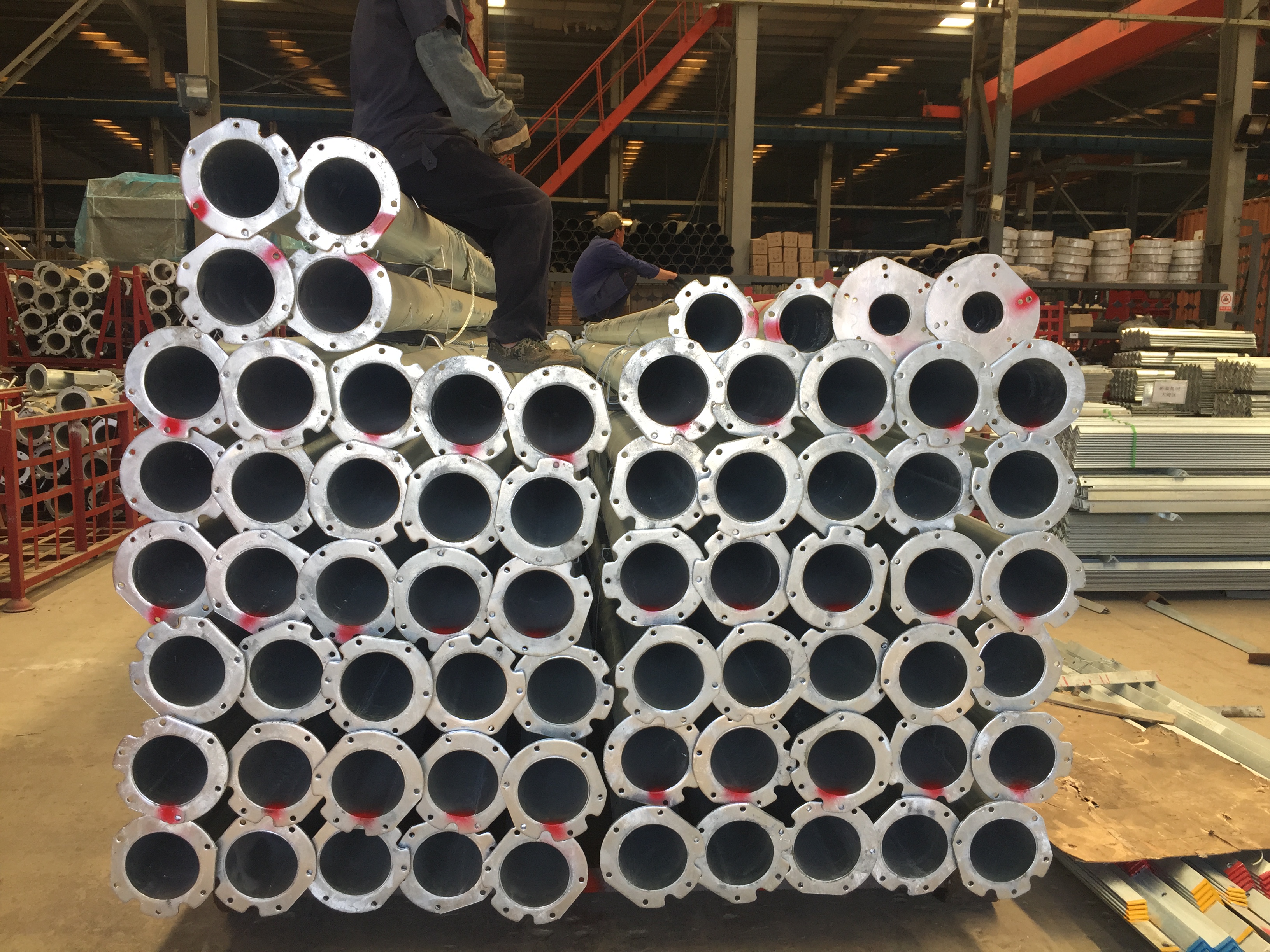
An irrigation pivot system that reaches the acceptance stage is usually decided by paperwork as much as by hardware. For the steel inside the machine - span pipe, trusses, tower cart frames and hose reel frames - the reference document most often requested by project owners, EPC contractors and distributor quality departments is GB/T 13912-2020 (widely cited as GB 13912-2020), the Chinese national standard for hot-dip galvanized coatings on fabricated iron and steel articles.
This guide is written for buyers who have already shortlisted a supplier and are now building the technical annex, the inspection plan and the delivery documents for a real project. It explains what GB/T 13912-2020 actually governs, why the Q235B structural steel grade matters to durability testing, how the same logic applies to center pivot spans and to hose reel frames, and which evidence a farm irrigation project needs in order to close its quality file.
Quick answer
- GB/T 13912-2020 governs the hot-dip galvanized coating on fabricated steel articles - its condition as delivered and the test methods used to verify it.
- Q235B is a structural carbon steel grade; the grade itself is defined by the national steel grade standard, not by the coating standard.
- Water distribution performance is governed separately - for example by ISO 11545:2009 for centre-pivot and moving lateral irrigation machines.
- At China Yulin Irrigation Equipment Co., Ltd., coating and structure claims are supported by CE, ISO 9001 and CSA certification, anti-corrosion and wind resistance testing, 100% pre-delivery testing, and photo-archived packing records.
Why Galvanizing Compliance Decides Project Acceptance
Galvanized irrigation structures rarely fail acceptance because the steel is too thin. They fail because the coating cannot be traced, verified or repaired in a documented way. That distinction matters for a distributor or project buyer, because it moves the risk from the machine itself to the paperwork that has to accompany the machine.
In practice, the same handful of issues appears again and again in farm irrigation projects:
- An annex that names a coating but not a standard edition. If the purchase order says "hot-dip galvanized" without naming GB/T 13912-2020, the inspector has no agreed reference and the supplier has no agreed target.
- Coating condition at handover. Long overland transport and repeated container handling abrade coated surfaces. Whether that damage is a defect or a repair item depends on what was agreed before shipment.
- Post-galvanizing modifications. Welded joints, cut edges and drilled holes made after galvanizing need an agreed repair method. Without one, site modifications become an open quality item.
- Material traceability. A declared steel grade without a mill certificate is an unverified claim, even when the steel itself is correct.
- Batch consistency. A project that expands in phases may receive spans galvanized in different production runs; the buyer needs a way to confirm consistency.
- Missing inspection records. The project engineer cannot close the quality file without test and inspection records, regardless of how good the machine looks.
The practical consequence of these gaps is rarely a rejected machine. It is a withheld retention, a second inspection visit, a delayed commissioning date, and a distributor absorbing the cost of both. Most of that is avoidable at the quoting stage, not at the delivery stage.
Industry Background: Larger Projects, Tighter Documentation
The commercial environment is pushing compliance requirements down the supply chain. Mordor Intelligence estimates the global center pivot irrigation system market at USD 2.56 billion in 2025, projected to reach USD 5.67 billion by 2030 - growth that is concentrated in large, formally procured projects rather than in single-machine purchases.
The structure of recent large deals supports that reading. Lindsay Corporation secured a multi-year international irrigation supply agreement in the MENA region valued at more than USD 100 million in 2024, and Valmont Industries reported Agriculture segment sales of USD 278.0 million in Q4 2024, equal to 26.7% of total net sales. Multi-year, multi-site contracts of this kind almost always carry a documentation obligation: an inspection file, a material declaration, and a warranty structure that can be audited later.
For distributors and importers, the pressure arrives differently. A distributor that buys from a manufacturer and resells into farm projects inherits the end client's acceptance criteria. If the manufacturer cannot supply coating and material records in a usable form, the distributor carries the compliance risk without having produced the equipment.
What GB/T 13912-2020 Covers on an Irrigation Pivot
GB/T 13912-2020 applies to hot-dip galvanized coatings on fabricated iron and steel articles. That word - fabricated - is the reason the standard is relevant to irrigation equipment rather than only to steel mills. A pivot span is not flat steel; it is a fabricated, welded, sometimes drilled and punched assembly with ends, flanges and brackets. The standard addresses the coating on that finished article: its condition as delivered, the coating achieved on the surface, the adhesion of the coating to the steel, and the test methods used to verify those properties.
What the standard does not cover
Three things are commonly assumed to sit inside GB/T 13912-2020 and do not:
- The steel grade. Q235B is defined by China's national structural steel grade standard (the GB/T 700 series), which sets chemical composition and mechanical properties. The galvanizing standard assumes suitable steel; it does not define it.
- Hydraulic performance. ISO 11545:2009 specifies the in-field method for determining the uniformity of water distribution from centre-pivot and moving lateral irrigation machines. A perfectly galvanized machine can still fail an irrigation performance test.
- Electrical and control components. Drives, panels and sensors are covered by their own product standards and, where applicable, by CE or CSA requirements.
This separation is useful commercially. It lets a project split its inspection plan into a coating file, a structural file and a performance file, each with a named reference and a named responsible party.
Q235B: the steel underneath the coating
Q235B is a structural carbon steel grade used widely in agricultural machinery frames and fabricated steel structures, including irrigation spans and hose reel frames. Its relevance to a compliance file is straightforward: the coating protects the steel, but the steel determines the load capacity of the machine. A coating certificate without a steel grade declaration answers only half of the inspector's question.
The two properties interact in one practical way that buyers should understand. Hot-dip galvanizing quality depends heavily on what happens before the article enters the zinc bath: correct fabrication sequence, clean and properly prepared steel surfaces, sound welds, and design details that allow the coating to form and drain correctly. This is why a supplier's fabrication control - not only its coating line - is part of the durability story.
The Compliance File a Buyer Should Receive
A coating claim becomes an accepted coating when it is documented. For a pivot project, the file that closes the quality question normally contains the following items, and it is worth writing them into the contract before production starts rather than requesting them after shipment:
- Material certificates for the declared structural steel grade of the span, truss, tower cart and hose reel frame steelwork.
- Galvanizing inspection records covering coating condition and the welded or fabricated zones where coating continuity is hardest to achieve.
- A pre-shipment test record. At Yulin Irrigation, each product undergoes 100% testing before delivery, which gives the buyer a unit-level record rather than a batch-level statement.
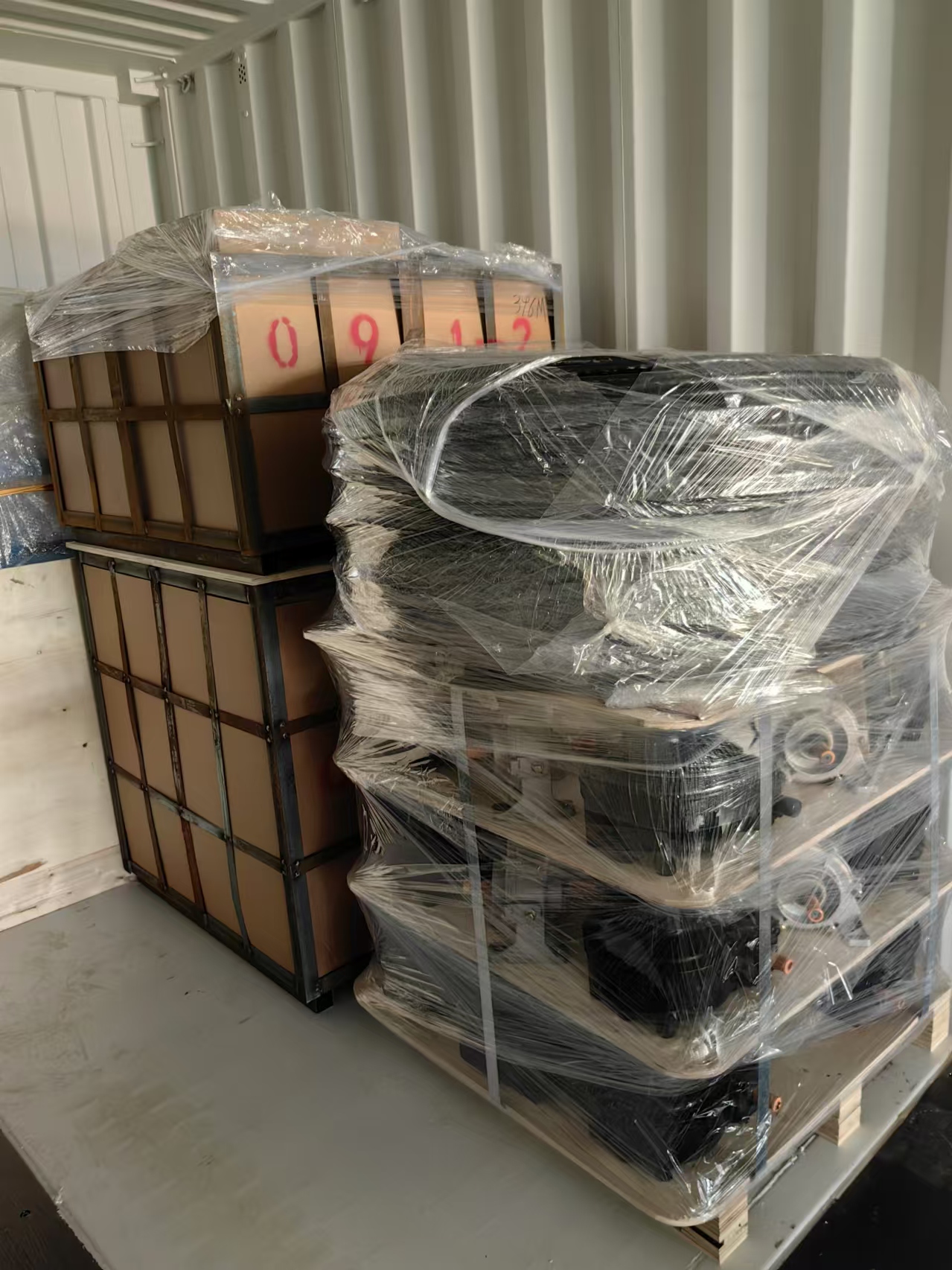
- A packing record. Photographic archiving of the reinforced, classified packaging before shipment is a simple control that reduces disputes about transit loss and breakage.
- A stated repair method for coating damaged in transit or by site modification after delivery.
- A warranty and spare-parts statement covering company-caused faults and in-warranty damage.
How China Yulin Irrigation Equipment Approaches Coating and Structure Control
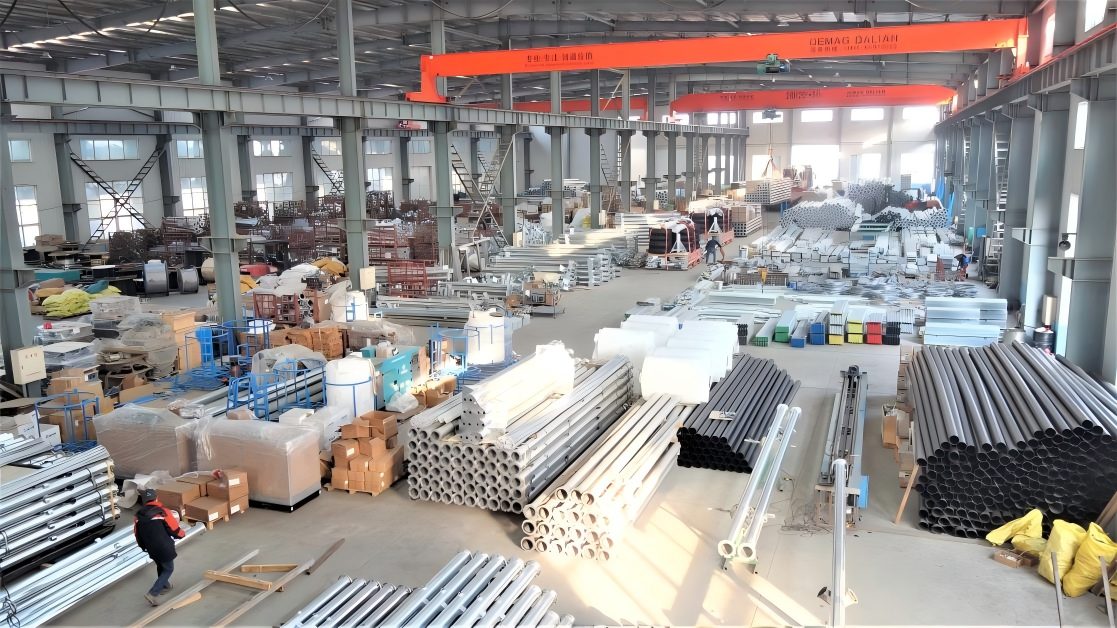
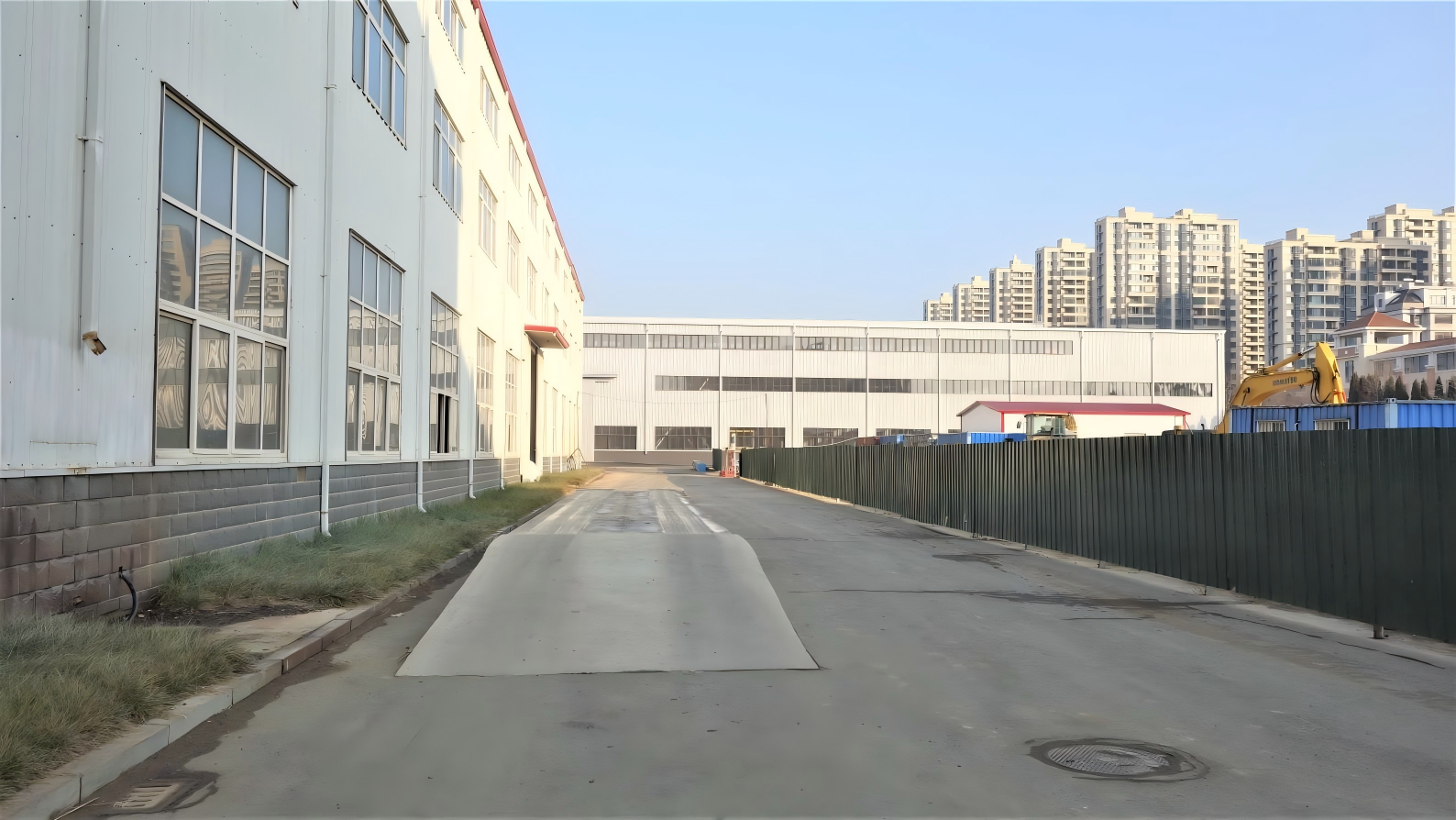
China Yulin Irrigation Equipment Co., Ltd. is a manufacturer of large agricultural irrigation machines - center pivot irrigation systems, lateral move irrigation systems, towing irrigation systems, hose reel irrigation systems and irrigation parts - established in 2009 in Lvshunkou District, Dalian City, Liaoning Province, China. The company operates a 64,653 m² facility with 152 employees, 10 R&D engineers and an annual output of 3,000 units across its product range, with a stated capacity of 400 pivot systems per year and a monthly hose reel production capacity of 60 units. Around 60% of output is exported to markets including Australia, New Zealand, Canada, Mexico, Africa, Central Asia, Russia and Kazakhstan.
Three capabilities are relevant to a galvanizing compliance discussion:
- Fabrication control. More than 95% of the machine's spare parts are independently manufactured in the factory, which allows full-process quality monitoring and more stable product consistency across production batches. The company built intelligent automated production workshops for robotic welding and precision processing, after accumulating manufacturing experience through OEM production for a global top irrigation company between 2000 and 2008.
- Corrosion and wind testing. Beyond CE, ISO 9001 and CSA certification, all irrigation equipment undergoes strict anti-corrosion and wind resistance testing intended for tropical, saline-alkali and high-wind farmland environments.
- Configuration flexibility. The R&D engineering team provides customized modification solutions based on farm terrain, crop varieties, power supply conditions and individual irrigation requirements, and the company accepts OEM and ODM orders.
Step-by-Step: Building Galvanizing Compliance into a Pivot Order
The sequence below is the practical order in which a Decision-to-Execution purchase should be locked down. Each step names the deliverable that should exist before the next step begins.
- Define the galvanized scope in the technical annex. List the component groups that are hot-dip galvanized - for example span pipe, truss and tower cart steelwork, hose reel frame. Anything not listed becomes a dispute later.
- Fix the steel grade and fabrication requirements. Name the declared structural grade (Q235B, for example) and require mill certificates. Specify that welded and cut areas must be suitable for coating, and that post-galvanizing site modifications require an agreed repair method.
- Cite GB/T 13912-2020 explicitly, including the edition. Reference the coating standard for the fabricated articles, and reference the water distribution standard separately if the project includes a performance test.
- Agree the documentation pack before production. Material certificates, galvanizing inspection records, pre-delivery test records and packing photographs should be specified as contractual deliverables, not as favours.
- Set the acceptance test. A pre-shipment test as the acceptance criterion gives the buyer a defined checkpoint while the machine is still in the factory, where corrections are cheapest.
- Confirm commercial and delivery terms. At Yulin Irrigation, the minimum order quantity is 1 unit, delivery terms are FOB, CFR or CIF, and payment terms are 30% deposit after contract confirmation with the balance by T/T before shipment (L/C or D/P are available for the Algeria market).
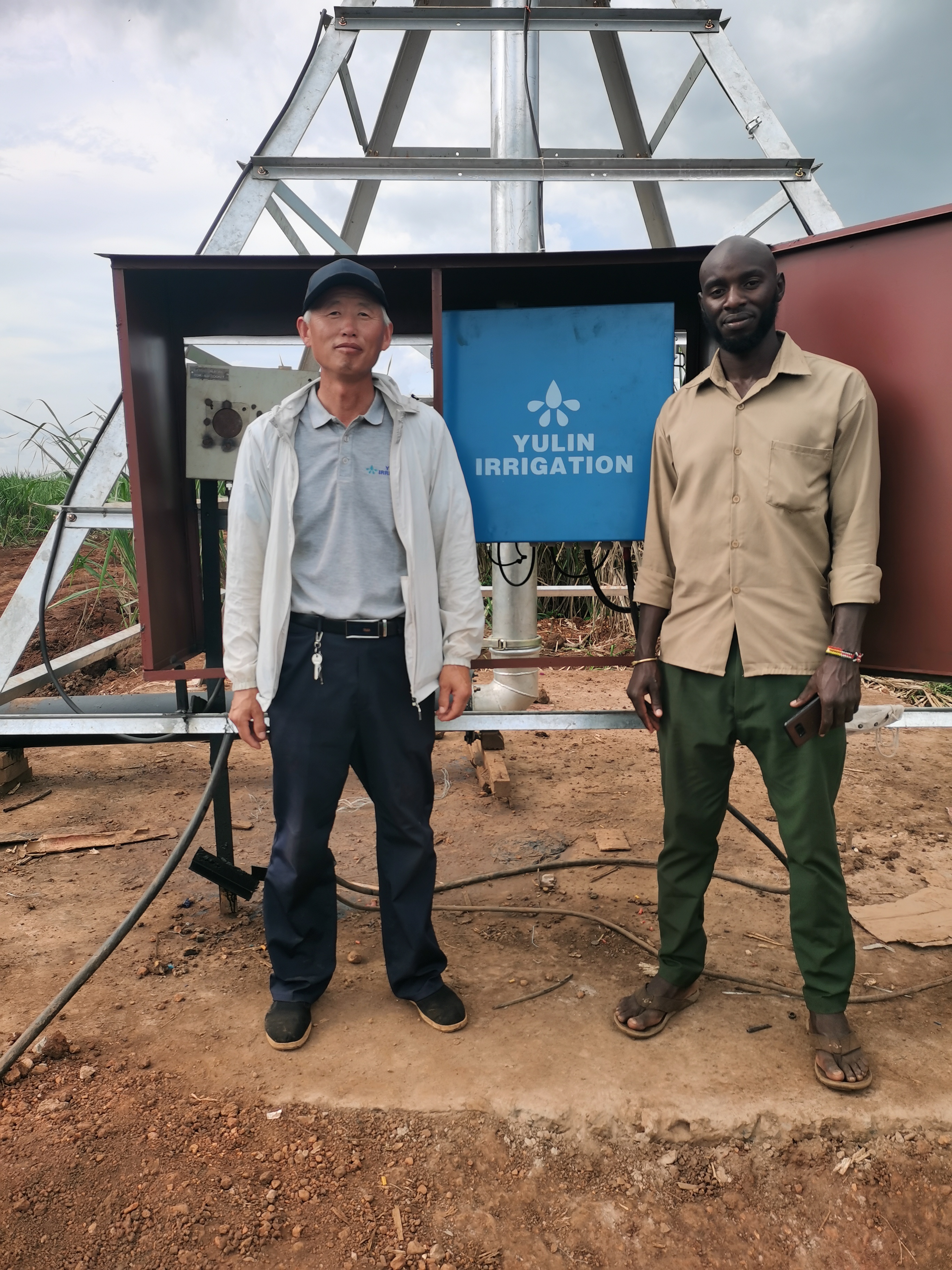
- Plan site execution. Installation, commissioning and operator training determine whether the coating and structure arrive intact in service. Yulin Irrigation dispatches engineers to client locations for on-site installation and operation training, supports customers with 24-hour online technical support from professional engineers, and operates a warranty policy for free replacement of defective components.
Use Cases: Where Coating Compliance Changes the Outcome
1. Coastal and saline-alkali farmland
Corrosive soil and air attack the coating first, not the steel. In these environments the anti-corrosion testing programme matters as much as the coating specification, because the project owner will typically require evidence that the machine was specified for that environment rather than simply delivered to it.
2. High-wind farmland
Wind loading tests the structure, and wind-driven abrasion tests the coating on exposed spans. A supplier that can present both structural grade documentation and coating records answers the full question, rather than half of it.
3. Hose reel machines on irregular and dispersed fields
Hose reel frames are large fabricated steel assemblies, and the compliance logic is identical to pivot spans. The JP800 hose reel irrigation machine, part of the JP90-300 series, is powered by a water turbine and does not require electricity. Its declared parameters - a net weight of 2180 kg (±30 kg), nozzle diameter of 16-22 mm, spray radius of 19-41 m, water flow rate of 25-52 t/h, inlet pressure range of 0.6-0.9 MPa and a DL50/SIMA10497 spray gun - give an inspector concrete figures to verify against the delivered machine.
4. Combined pivot and hose reel projects
Where a system combines a center pivot irrigation machine with supplementary equipment, the configuration itself becomes part of the compliance file. Typical configurations include an end spray gun for supplementary irrigation, poly pipe to resist corrosion from water acidity or alkalinity, and a fertilizer tank, with pesticide addition used for integrated pest control. Because these items are added to the galvanized structure, they should appear in the same technical annex as the coating requirement.
Comparison Table: What Each Reference Actually Governs
The table below separates the references that are routinely bundled together in a pivot specification. Each row has a different scope, a different responsible party and a different inspection moment.
| Reference | Scope | Where it applies on a pivot project | Situation at Yulin Irrigation |
|---|---|---|---|
| GB/T 13912-2020 (cited as GB 13912-2020) | Hot-dip galvanized coatings on fabricated iron and steel articles, including coating condition and test methods | Span pipe, trusses, tower cart frames, hose reel frames | Coating control during fabrication, supported by anti-corrosion and wind resistance testing |
| National structural steel grade standard (GB/T 700 series) | Chemical composition and mechanical properties of structural carbon steel | Load-bearing fabricated steel members declared as Q235B | Declared structural grade, documented through material certificates |
| ISO 11545:2009 | In-field determination of water distribution uniformity for centre-pivot and moving lateral irrigation machines | Whole-machine irrigation performance after assembly | Handled as a separate performance question; requested independently by project owners |
| CE, ISO 9001, CSA | Product and management system certification | Export acceptance in Europe, North America and comparable markets | Held by China Yulin Irrigation Equipment Co., Ltd. |
Component-level verification checklist
The second table converts the standard into the specific questions a buyer should ask, component by component. This is the version worth attaching to a purchase order.
| Component group | Why it is checked | What the buyer should request |
|---|---|---|
| Pivot span pipe | Largest exposed coated surface; coating condition drives service life in humid or saline air | Material certificate for the declared steel grade plus galvanizing inspection records |
| Truss and tower cart steelwork | Welded assemblies where coating continuity is hardest to achieve | Coating inspection record covering welded zones and an agreed repair method for site modifications |
| Hose reel frame | Large fabricated frame carrying a moving hose load | Coating record plus weight verification against the declared figure |
| Fasteners and connections | Most frequently damaged items in transit | Spare parts provision and warranty terms for replacement |
| Documentation pack | Determines whether the project quality file can be closed | Pre-shipment test report, packing photo archive, warranty statement |
Declared parameters for the JP800 hose reel irrigation machine
Verifiable figures matter because they give an inspector something to measure. For the JP800, the declared parameters are as follows.
| Parameter | Declared value |
|---|---|
| Model | JP800 (JP90-300 series) |
| Drive | Water turbine; does not require electricity |
| Net weight | 2180 kg (±30 kg) |
| Nozzle diameter | 16-22 mm |
| Spray radius | 19-41 m |
| Water flow rate | 25-52 tons per hour |
| Inlet pressure range | 0.6-0.9 MPa |
| Spray gun model | DL50/SIMA10497 |
| Pre-delivery testing | 100% of products tested before delivery |
The Long-Term View: Compliance as a Distributor Asset
For a distributor, a compliance file is not a one-off cost. It is reusable sales material. Once a coating and material file has been accepted by one project owner, it becomes the template for the next tender, and the next, which is where the economics of a long-term supplier relationship sit.
Yulin Irrigation's published comparison data for its high-efficiency pivot systems states an initial cost about 30% higher than an electricity-driven alternative, with total cost of ownership about 40% lower over a ten-year period, an irrigating rating of 88%-98%, a service-life expectation of 25 years and roughly 90% less maintenance required. Those figures describe the manufacturer's own product comparison, and a buyer should verify them against the specific configuration being quoted - but they illustrate the point that matters for a compliance discussion: durability claims and coating claims are the same conversation, because service life is what the coating is protecting.
For distributors building long-term programmes, the operational facts that matter most are supply predictability and after-sales structure. Yulin Irrigation's stated capacity of 400 pivot systems per year, monthly hose reel production capacity of 60 units, and free spare parts reissue for company-caused faults and in-warranty damage support a distributor model in which the reseller is not carrying the failure risk alone.
Frequently Asked Questions
Does GB/T 13912-2020 apply to both center pivot spans and hose reel frames?
Yes. The standard applies to hot-dip galvanized coatings on fabricated iron and steel articles, which covers pivot span pipe, trusses, tower cart steelwork and hose reel frames alike, because all of them are fabricated steel assemblies rather than flat steel. It does not cover the steel grade itself, which is defined by the national structural steel grade standard, and it does not cover irrigation performance - ISO 11545:2009 provides the in-field method for determining water distribution uniformity for centre-pivot and moving lateral irrigation machines. A complete project file therefore cites the coating standard, the steel grade standard and the performance standard separately.
What testing and documentation can a manufacturer provide to close a galvanizing quality file?
A usable file includes material certificates for the declared steel grade, galvanizing inspection records for fabricated and welded zones, a pre-shipment test record, and a packing record. China Yulin Irrigation Equipment Co., Ltd. tests 100% of products before delivery, archives photographs of classified reinforced packaging before shipment, and holds CE, ISO 9001 and CSA certification. The company also applies anti-corrosion and wind resistance testing to its irrigation equipment to suit tropical, saline-alkali and high-wind farmland environments. All machines are produced in a 64,653 m² facility where more than 95% of spare parts are manufactured in-house, which supports full-process quality monitoring and consistent batch-to-batch output.
What are the commercial terms for a project or distributor order?
Yulin Irrigation works with a minimum order quantity of 1 unit, which allows a single-machine trial project as well as fleet procurement. Delivery terms are FOB, CFR or CIF, and the acceptance criterion is a pre-shipment test. Payment terms are 30% deposit after the contract is confirmed, with the balance by T/T before shipment; L/C or D/P are accepted for the Algeria market. Because configuration, coating scope and documentation requirements vary by project, pricing is quoted against the technical annex rather than published as a list price.
Can a buyer validate a sample or visit the factory before committing to a fleet order?
Yes. The 1-unit minimum order quantity is designed for exactly this purpose: a buyer can receive a machine, inspect the coating and fabrication quality against the agreed standard, verify the declared parameters - for example the JP800 hose reel machine's 2180 kg (±30 kg) net weight, 16-22 mm nozzle diameter, 19-41 m spray radius, 25-52 t/h flow rate and 0.6-0.9 MPa inlet pressure - and then scale the order. Factory evaluation in Dalian is also practical from a logistics standpoint, since the factory is roughly two hours by truck from Dalian Port.
How should agricultural distributors select a long-term irrigation pivot system manufacturer?
Three criteria separate a long-term partner from a transactional supplier. First, supply predictability: China Yulin Irrigation Equipment Co., Ltd. states an annual capacity of 400 pivot systems, a monthly hose reel production capacity of 60 units and an annual output of 3,000 units across its range, with around 60% of production exported. Second, after-sales structure that protects the reseller: engineers are dispatched to client locations for installation and operator training, 24-hour online technical support is provided by professional engineers, and defective components are replaced free of charge under warranty, with free spare parts reissue for company-caused faults and in-warranty damage. Third, product coverage that matches a distributor's market mix - center pivot, lateral move, towing, hose reel and irrigation parts - plus OEM and ODM support for distributors carrying their own brand. Buyers who want to test that combination at low risk can request a sample, a project quotation or a distributor briefing before committing to a programme.
Conclusion: Fix the Standard, Then Fix the Order
Galvanizing compliance on an irrigation pivot project is decided in the technical annex, not on the delivery day. Naming GB/T 13912-2020 for the fabricated steel articles, declaring the Q235B structural grade with material certificates, and referencing ISO 11545:2009 for irrigation performance gives an inspector three separate, verifiable files instead of one vague coating claim. Everything downstream - pre-shipment testing, packing records, transit repairs, warranty replacement - then has a reference to attach to.
For distributors, the same logic compounds. A supplier that can produce a repeatable compliance file becomes a supplier that can be taken into formal tenders, which is what turns a first order into a long-term channel relationship.
Request a sample, a project quotation or the 2026 YULIN Pivot Catalogue
Send your technical annex, target market and acceptance requirements, and China Yulin Irrigation Equipment Co., Ltd. will respond with a component-level compliance pack covering coating scope, steel grade documentation, pre-delivery test records and packing procedures - together with a quotation and, where required, a sample or factory visit arrangement.
Download the 2026 YULIN Pivot Catalogue Talk to an engineer on WhatsAppEmail: yulinirrigation@hotmail.com · Tel / WhatsApp: +86 158-4249-7638 · Website: www.cyulin.net · Address: 329-1 of Shunle Street, Lvshunkou District, Dalian City, Liaoning Province, China
Have Questions or Need More Details?
Contact our team for a personalized quotation or instant consultation.
Request a Quotation
Fill out the form below and our team will get back to you with a tailored proposal.
WhatsApp Direct Chat
Prefer to chat in real-time? Message us on WhatsApp for instant assistance & quick answers.
- Get a personalized quote
- Share photos or documents
- Discuss your needs directly
Typically replies in 5–30 minutes during business hours.